Cognitive Behavioral Therapy (CBT)
The Center for Youth Mental Health offers Cognitive Behavioral Therapy (CBT) and other evidence-based treatments for children, teens, and young adults. CBT is the gold standard for treating depression and anxiety disorders in youth. CBT helps young people recognize and change unhelpful thoughts and behaviors, improve mood, coping, and self-confidence.
Here’s how it works:
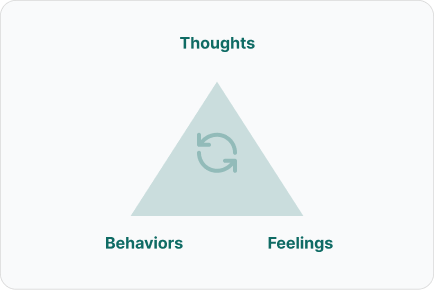
Identify the cycle
Our thoughts, feelings, and behaviors form a cycle that reinforces itself. For example, negative thoughts can lead to feelings of anxiety, sadness, or frustration, which can then drive behaviors like procrastination, social withdrawal, or avoiding challenges. These behaviors then reinforce negative thoughts, which reinforce the negative feelings, and so on.
Reframe negative thoughts
A key focus of CBT is breaking this negative cycle by recognizing and challenging automatic negative thoughts (ANTs) those unhelpful background thoughts that can trigger negative emotions and behaviors. Here are just a few examples of cognitive distortions:
Black-and-white thinking
“If I don’t pass this test, it means I’m stupid.”
Reframed:
“If I don’t pass, it means I didn’t do well this time, but I can practice more and learn from my mistakes.”
Catastrophizing
“If I don’t get into the right college, my future will be ruined.”
Reframed:
“There are many paths to success, and I can still build a fulfilling life with other opportunities.”
Jumping to conclusions
“She didn’t text me back. She must be mad at me.”
Reframed:
“She didn’t text me back. She could be busy or distracted, and there are many other reasons she might not have responded yet.”
Mind reading
“They all think I’m awkward and weird.”
Reframed:
“I can’t know what others are thinking. Regardless of what I’m doing, they are probably focused on themselves.”
Modify behaviors
Once your child has reframed their ANTs, a CBT therapist will help your child take action to break the cycle of negativity. This might mean gradually facing things that scare them, doing activities that boost their mood, or figuring out practical solutions to manage stress.
Establish a new positive cycle
Now your child can build a cycle of positive reinforcement, where changing negative thoughts boosts their emotions, which in turn inspires positive behaviors, and so on.
Your child and their therapist will focus on practical strategies to help them identify and change negative thought patterns, develop healthier behaviors, and improve emotional well-being.
Here are some key CBT skills your child will learn:
Behavioral activation
Engaging in activities that improve mood and break negative cycles, like setting small goals or trying new, positive behaviors.
Problem Solving
Breaking down challenges into manageable steps, developing effective solutions, and building confidence in handling life’s difficulties.
Skill building
Teaching coping mechanisms, like relaxation techniques or communication strategies, to better handle difficult emotions or situations.
Gradual exposure
Gradually confronting fears or anxieties in a controlled way to reduce avoidance and build confidence.
Self-awareness
Learning to notice automatic thoughts and emotional responses in the moment, which helps to break unhelpful patterns.
How Can We Help?
If you have questions or would like to make an appointment, please complete this form, and we will get back to you as soon as possible. You can also email kerri@cymh.org or call our SLO Center at (805) 996-0535 or our Santa Cruz Center at (831) 222-0052.

Support Mental Health. Support the Future.
Your donation helps provide low-cost treatment, parents programs,
scholarships, and traning opportunities.