Parent Management Training (PMT)
The Center for Youth Mental Health offers Parent Management Training (PMT), an evidence-based treatment for families of children and teens with oppositional, defiant, or disruptive behavior. PMT helps caregivers understand behavior patterns, strengthen positive interactions, set clear expectations, and respond consistently. These skills can reduce conflict, improve cooperation, and support healthier family relationships.
Here’s how it works:
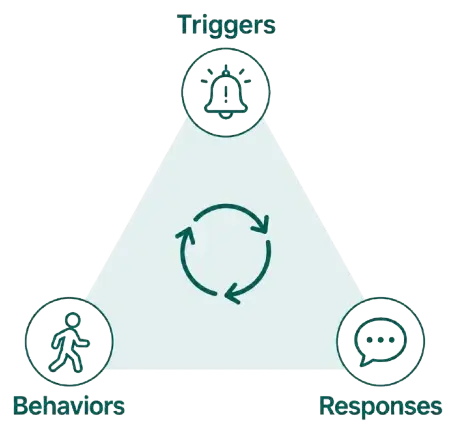
Understand the behavior cycle
Our thoughts, feelings, and behaviors form a cycle that reinforces itself. For example, negative thoughts can lead to feelings of anxiety, sadness, or frustration, which can then drive behaviors like procrastination, social withdrawal, or avoiding challenges. These behaviors then reinforce negative thoughts, which reinforce the negative feelings, and so on.
Strengthen positive behavior
PMT shifts attention toward the behaviors you want to see more often. Parents learn to use specific praise, positive attention, meaningful rewards, and calm follow-through to strengthen cooperation, effort, flexibility, and respectful communication.
Specific praise
“Good job.”
Try:
“You got ready when I asked. That was responsible.”
Positive attention
“Giving attention mainly during arguments or misbehavior.“
Try:
“Notice cooperation and create brief, predictable one-on-one time.”
Meaningful rewards
“Maybe you’ll get something later.”
Try:
“When your homework is finished, you can have 20 minutes of game time.”
Calm follow-through
“Repeating warnings or becoming involved in a long argument.”
Reframed:
“State the expectation once and follow through calmly and consistently.”
Give clear directions and consequences
Your therapist will help you give brief, specific directions, allow reasonable time for cooperation, and follow through calmly. Families develop a small number of clear rules and predictable consequences so children can better understand expectations and connect their choices with consistent outcomes.
Build a new positive cycle
PMT skills become stronger through regular practice during routines such as mornings, homework, meals, transitions, and bedtime. Your therapist will review progress, help your family solve new challenges, and adjust strategies as your child’s needs change. Over time, parents learn to combine warmth with structure, remain calmer during conflict, and use these tools independently across different situations.
Here are some key PMT skills your family will learn:
Behavior Assessment
Identifying common triggers, routines, expectations, and adult responses that may influence your child’s behavior.
Positive Reinforcement
Using attention, specific praise, and meaningful rewards to strengthen cooperation, effort, and respectful behavior.
Clear Communication
Giving brief, specific directions and making sure expectations are understandable and appropriate.
Consistent Consequences
Following through calmly with fair and predictable outcomes when expectations are not met.
Parent Self-Regulation
Managing emotional reactions, reducing arguments, and responding with a balance of warmth, confidence, and structure.
How Can We Help?
If you have questions or would like to make an appointment, please complete this form, and we will get back to you as soon as possible. You can also email kerri@cymh.org or call our SLO Center at (805) 996-0535 or our Santa Cruz Center at (831) 222-0052.

Support Mental Health. Support the Future.
Your donation helps provide low-cost treatment, parents programs,
scholarships, and traning opportunities.