Body-Focused Repetitive Behaviors


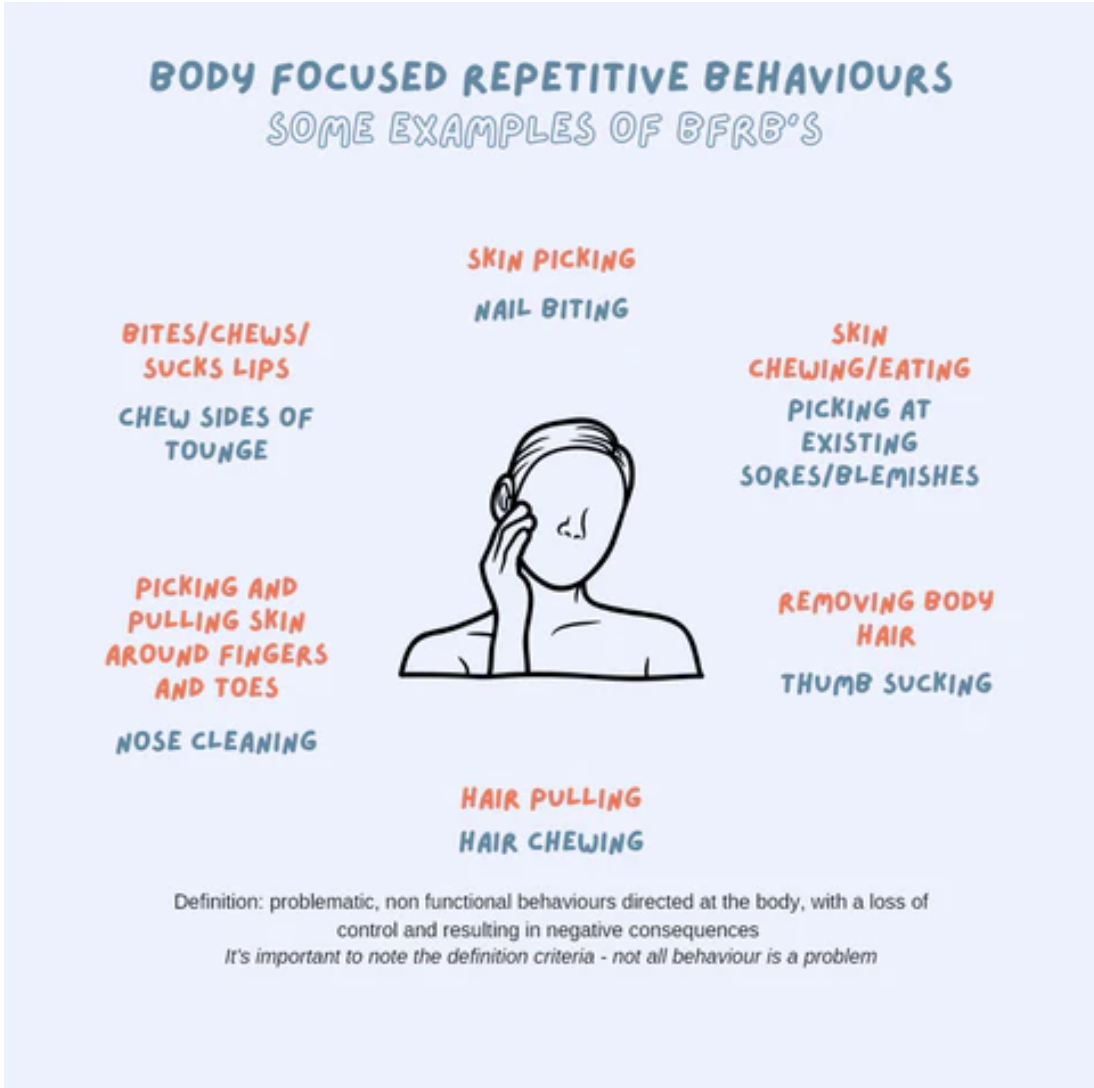
Body-focused repetitive behaviors, or BFRBs, are repeated actions involving the hair, skin, or nails, including hair pulling, skin picking, nail biting, and cheek or lip biting. These behaviors may happen automatically or during stress, boredom, anxiety, uncomfortable sensations, or strong emotions.

Although they may provide brief relief, BFRBs can cause physical damage, shame, distress, and difficulty stopping without appropriate support.

Body-Focused Repetitive Behaviors (BFRBs): It is an umbrella term for a group of complex, compulsive behaviors where a person repeatedly touches, pulls, picks, bites, or scrapes their own hair, skin, or nails.

These behaviors go beyond standard habits like casual nail-biting; they are intense, difficult to stop, and often lead to physical damage, emotional distress, or social withdrawal.

Definitions:

Trichotillomania: Hair pulling

Dermatillomania/Excoration Disorder: Skin picking
Common BFRB Challenges

Many young people experience BFRBs but may hide them because of embarrassment or misunderstanding. CYMH provides accessible, evidence-based mental health care for children, teens, young adults, and their families across both counties today.

Hair Pulling

Hair pulling, also called trichotillomania, involves repeated pulling from the scalp, eyebrows, eyelashes, or other areas. Young people may notice an urge before pulling or realize it only afterward. The behavior can cause visible hair loss, skin irritation, embarrassment, and attempts to hide affected areas daily overall.

Skin Picking

Skin picking, also called excoriation disorder, involves repeated picking, scratching, squeezing, or rubbing of the skin. It may focus on blemishes, scabs, or perceived imperfections and can happen with limited awareness. Repeated picking may lead to sores, scarring, infection, shame, and avoidance of social situations and difficulties participating in everyday activities.

Nail, Cheek, or Lip Biting

Nail, cheek, or lip biting may happen automatically while concentrating, feeling bored, or experiencing stress. Some young people notice mounting tension before the behavior and relief afterward. Repetition can lead to pain, bleeding, damaged nails, mouth injuries, infection, and difficulty stopping despite repeated efforts or requests to stop independently.

Urges and Triggers

BFRBs are often connected to sensory experiences, emotions, situations, or routines. Common triggers include stress, boredom, fatigue, studying, screen time, and uncomfortable skin sensations. Understanding each young person’s patterns is important because triggers and behaviors can differ significantly from one person to another.

Comprehensive Behavioral Model, or ComB

Getting to know the "why" behind the pulling.
CYMH uses ComB, the gold-standard treatment for BFRBs.
One of our therapists will gently explore several areas with your child or teen, often including:

What it feels like...

Are there physical sensations involved, either that trigger pulling or that make it feel satisfying?

What they're thinking...

Are there certain thoughts, like "this doesn't feel right" or "I need it to be even," that show up beforehand?

What they're feeling

Does pulling tend to happen during stress, boredom, anxiety, or even relaxation (like watching TV)?

How it happens physically...

Is your child aware they're pulling, or does it happen almost automatically, without them noticing?

Where and when it happens...

Are there specific places or situations — the car, bedtime, homework — where it tends to come up?

Learn more about ComB

You can find more information about ComB under "Treatments We Use"

Support Mental Health. Support the Future.

Your donation helps provide low-cost treatment, parents programs,

scholarships, and traning opportunities.