
Supportive Parenting for Anxious Childhood Emotions (SPACE)
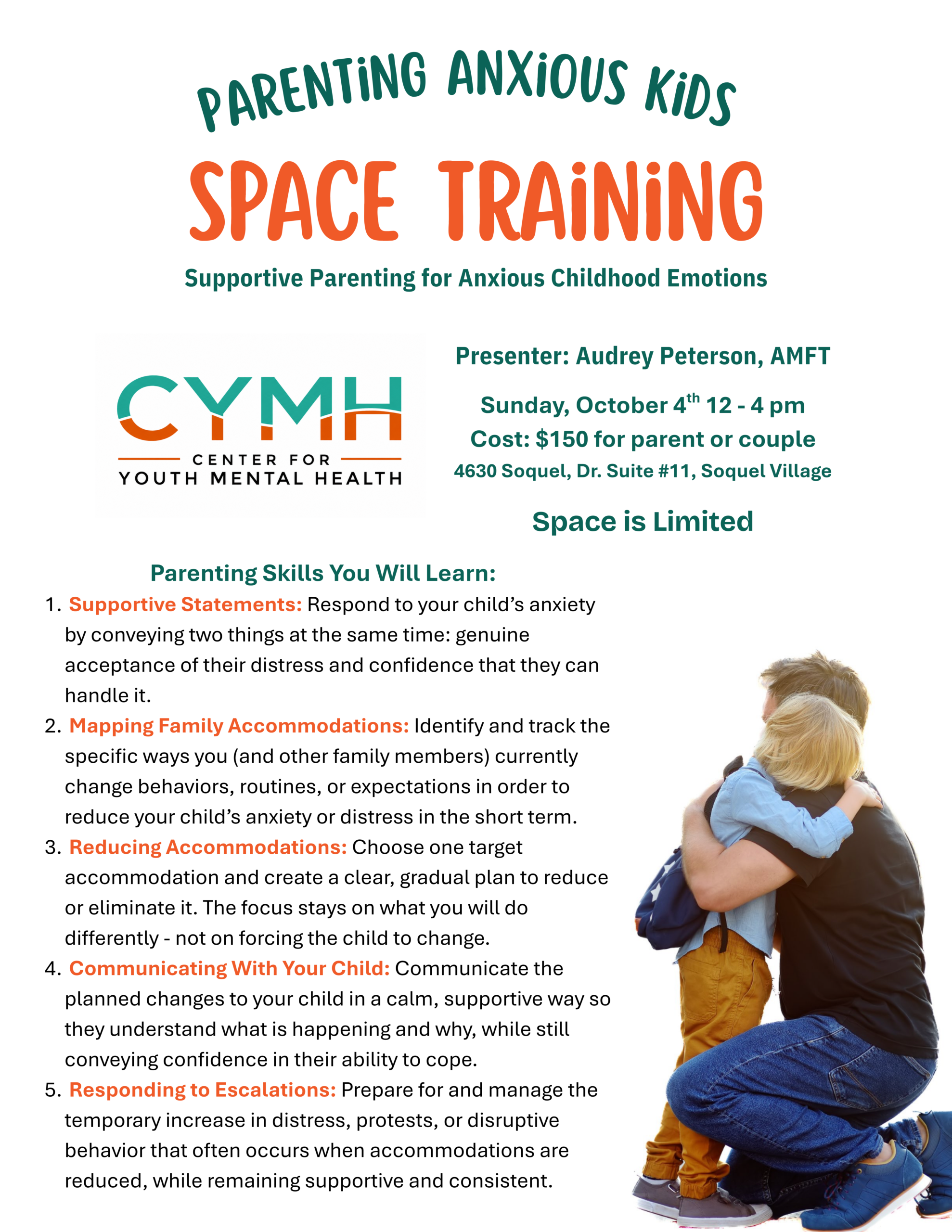
The Center for Youth Mental Health offers SPACE training for parents and caregivers of children and teens struggling with anxiety, OCD, or related challenges. SPACE is an evidence-based, parent-focused treatment developed by Dr. Eli Lebowitz at the Yale Child Study Center. Unlike traditional approaches that work primarily with the child, SPACE works with parents. You will learn how to change the way you respond to your child’s anxiety so that you can support them without unintentionally reinforcing fearful or avoidant patterns.
Here are some key parenting skills you will learn:
Supportive Statements
Respond to your child’s anxiety by conveying two things at the same time: genuine acceptance of their distress and confidence that they can handle it. Example: “I know this feels really hard right now, and I’m sure you can get through it.”
Mapping Family Accomodations
Identify and track the specific ways you (and other family members) currently change your behavior, routines, or expectations in order to reduce your child’s anxiety or distress in the short term.
Reducing Accommodations
Choose one target accommodation and create a clear, gradual plan to reduce or eliminate it. The focus stays on what you will do differently—not on forcing the child to change.
Communicating With Your Child
Communicate the planned changes to your child in a calm, supportive way so they understand what is happening and why, while still conveying confidence in their ability to cope.
Responding to Escalations
Prepare for and manage the temporary increase in distress, protests, or disruptive behavior that often occurs when accommodations are reduced (sometimes called an “extinction burst”), while remaining supportive and consistent.
Santa Cruz SPACE Training Sign-Up
If would like to sign-up for our upcoming SPACE Training in Santa Cruz, please complete this form. You can also email audrey@cymh.org or call our Santa Cruz Center at (831) 222-0052.
Support Mental Health. Support the Future.
Your donation helps provide low-cost treatment, parents programs,
scholarships, and traning opportunities.